Buying SSL/TLS Certificates: Best Practices for 2026
The rules governing SSL and TLS certificates have shifted meaningfully over the past few years, and 2026 is shaping up to be a pivotal year for anyone still treating certificate purchasing as a once-a-year, set-it-and-forget-it task. This article covers what organizations should actually be doing when buying certificates today, with an eye toward the shorter lifespans, tighter automation requirements, and expanding machine identity needs that now define the landscape.
The Shrinking Certificate Lifespan Timeline
The CA/Browser Forum’s Ballot SC-081v3 has set the industry on a firm path toward dramatically shorter certificate validity periods. Maximum lifespans are dropping to 200 days starting in March 2026, tightening further to 100 days from March 2027, and eventually reaching just 47 days from March 2029. This is not a minor administrative change. It means the manual renewal habits many organizations have relied on for years, checking a spreadsheet every few months and renewing by hand, will simply stop being viable well before the end of this decade. Anyone buying certificates today should be building automation into the purchase decision itself, not treating it as a future project.
Choosing the Right Validation Level for the Job
Not every certificate needs the same level of scrutiny behind it. Domain Validated certificates are appropriate for internal tools, development environments, and low-risk public sites where speed and cost matter more than organizational verification. Organization Validated certificates make more sense for customer-facing production systems, particularly anything handling personal data, since they provide a documented verification trail that matters during audits and incident investigations. The right call depends on what the certificate is actually protecting and who is relying on it, not on habit or on whatever level was chosen the last time.
Evaluating CA Reputation and Reliability
Not all Certificate Authorities carry equal weight, and CA incidents, including mass revocations triggered by validation failures discovered after the fact, have real operational consequences for anyone relying on that CA’s certificates. Before buying, it is worth checking a CA’s track record with browser root programs, its incident history, and the responsiveness of its support organization, since a fast, reliable renewal process during a certificate emergency can matter as much as the certificate itself.
Automation Is No Longer Optional
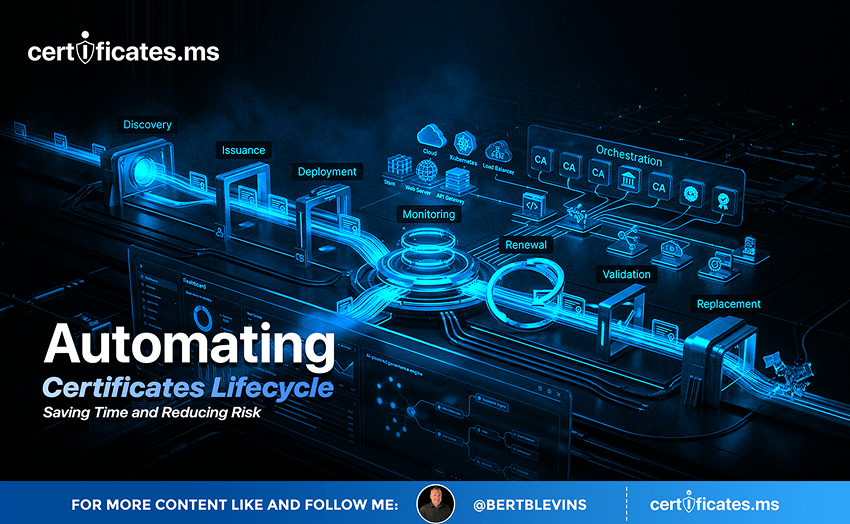
With validity periods shrinking toward weeks rather than years, automated issuance and renewal, typically through the ACME protocol, has moved from a nice-to-have to a baseline requirement. Organizations buying certificates in 2026 should prioritize CAs and certificate management platforms with strong ACME support, robust APIs, and integration options for the orchestration and DevOps tooling already in use. A certificate that cannot be renewed automatically is, functionally, a future outage waiting for a date on the calendar.
Key Management Best Practices
Buying a certificate is only half the picture; protecting the private key associated with it is the other half, and arguably the more consequential one. Keys should be generated with adequate length and modern algorithms, stored in hardware security modules or secure vaults rather than plain files where practical, and rotated on a schedule that matches or exceeds the certificate’s own validity period. A compromised private key undermines every guarantee the certificate was purchased to provide, regardless of how reputable the issuing CA was.
Certificates for AI-Driven Systems Deserve Their Own Line Item
A growing share of certificate purchasing decisions in 2026 are no longer about a company’s public website at all. They are about securing the APIs and internal services that AI agents call on a company’s behalf, sometimes thousands of times a day, often across multiple internal systems with different sensitivity levels. These machine-to-machine connections benefit from the same shortening-lifespan logic driving the broader industry, but they also demand tighter scoping, since an AI agent’s certificate should typically be authorized for exactly the systems its task requires and nothing more. Buying decisions for this category of certificate should account for issuance volume, automation depth, and integration with whatever identity governance platform tracks which AI service is allowed to talk to which system.
A Practical Buying Checklist
Before finalizing a certificate purchase in 2026, it is worth confirming a short list of items: does the CA support full ACME automation, does the validation level match the actual risk of what is being protected, is there a clear key storage and rotation plan, does the purchasing decision account for the upcoming 200-day and eventual 47-day maximum lifespans, and has ownership been assigned so that no certificate becomes an orphaned asset nobody is watching. Certificates bought with these questions answered in advance age far better than certificates bought in a hurry, and in a year where the industry’s own rules are actively tightening, buying with foresight has become the actual best practice.
The Countdown Is Already Running: 200 Days, 100 Days, 47 Days
Every certificate conversation in 2026 eventually arrives at the same clock, and it is worth closing on it here. The CA/Browser Forum’s Ballot SC-081v3 is not a proposal under discussion; it is an approved, already-in-motion schedule. Maximum public TLS certificate lifetimes fall from 398 days to 200 days on March 15, 2026. They fall again to 100 days on March 15, 2027. By March 15, 2029, they drop to just 47 days, with domain validation itself needing to be re-proven roughly every 10 days.
Translate that into operational terms and the picture gets stark quickly. An organization currently renewing certificates a few times a year will be handling renewal events on the order of every couple of weeks by the end of this countdown, across every endpoint it operates. Manual tracking, calendar reminders, and a spreadsheet somebody checks once a month will not survive contact with that cadence. What has always been an occasional chore is becoming a continuous, automated operation, whether an organization plans for it or not.
Every best practice in this article, from validation level to key management, ultimately serves one goal: surviving the schedule below without an outage, so it belongs at the center of any certificate purchasing decision made this year.
The 200-day, 100-day, and 47-day milestones are not distant hypotheticals; the first has already arrived. Organizations that build the automation loop now, generating keys, vaulting them securely, brokering issuance across Certificate Authorities through APIs, and rebinding certificates to live endpoints without manual intervention, will meet each deadline without disruption. Organizations that wait will be rebuilding their certificate operations under deadline pressure, with far less room for error and far less time to get it right. The countdown is the call to action. The only real decision left is whether to automate on your own schedule, or on the CA/Browser Forum’s.