Public-Facing Router Certificate Hardening Techniques
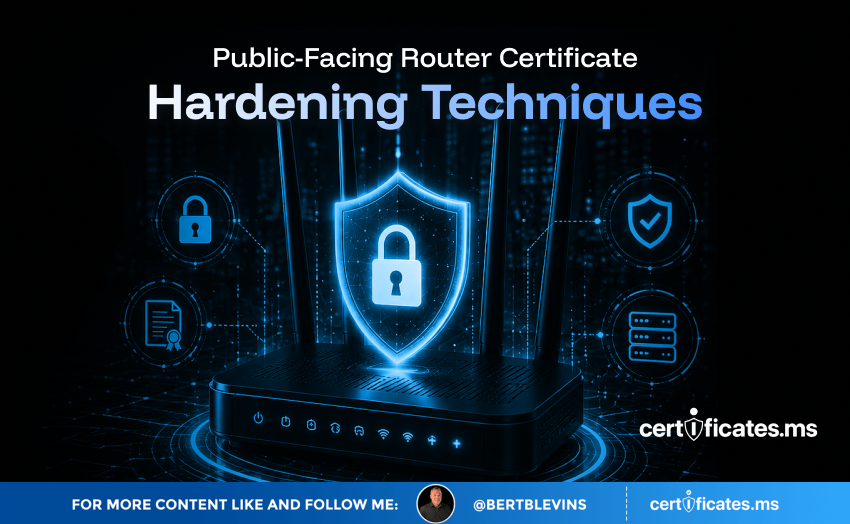
Having a properly issued, correctly chained certificate on a public-facing router, covered in the general best practices article earlier in this series, is the starting point, not the finish line. Hardening goes further, actively reducing the attack surface around that certificate and the TLS configuration surrounding it. This article focuses specifically on hardening techniques that go beyond basic certificate hygiene.
Restricting TLS Protocol Versions Explicitly
A properly issued certificate does nothing to prevent a router’s management interface from still accepting outdated, insecure TLS versions if those versions were never explicitly disabled, and older router firmware frequently defaults to broader protocol support than current best practice recommends. Hardening a public-facing router means explicitly disabling any TLS version older than the current recommended minimum, rather than leaving legacy protocol support enabled simply because it happened to be the factory default.
Curating Cipher Suites Deliberately
Beyond protocol version, the specific cipher suites a router’s TLS configuration accepts deserve deliberate curation, disabling weak or deprecated ciphers even within an otherwise modern TLS version, and prioritizing cipher suites offering forward secrecy, which ensures that even a future key compromise cannot retroactively decrypt previously captured traffic. Router administrators should periodically review their cipher suite configuration against current guidance rather than assuming a configuration set once during initial deployment remains appropriate indefinitely.
Rate Limiting and Handshake Abuse Protection
Public-facing routers, particularly those exposing a management interface or VPN endpoint directly to the internet, are attractive targets for automated scanning and handshake-flooding attempts, and hardening should include rate limiting TLS handshake attempts from a single source, reducing the practical impact of both reconnaissance scanning and resource-exhaustion attacks aimed at the router’s TLS stack specifically rather than at the broader network behind it.
Minimizing the Exposed Management Surface
A genuinely hardened approach questions whether a management interface needs to be internet-facing at all, and where possible, restricting administrative access to a VPN-only or otherwise segmented path considerably reduces the attack surface compared to leaving a certificate-protected but still directly internet-reachable management console as the only barrier between an attacker and administrative access. Where an internet-facing management interface is genuinely unavoidable, layering additional access controls, IP allowlisting, geographic restriction, and the client certificate authentication discussed elsewhere in this series, provides meaningful defense in depth beyond the server certificate alone.
Disabling Insecure Renegotiation and Legacy Fallback Behavior
Some router firmware retains legacy TLS renegotiation or protocol downgrade fallback behavior for backward compatibility with very old clients, behavior that a hardened configuration should disable explicitly, since these legacy compatibility features have historically introduced exploitable vulnerabilities and provide little practical benefit against the extremely small population of clients that would actually require them today.
Regular Hardening Audits, Not Just Initial Configuration
Router hardening should be treated as an ongoing discipline rather than a one-time deployment task, with periodic reviews confirming the configuration still matches current best practice as guidance evolves and as firmware updates occasionally reset or alter previously hardened settings. Automated configuration compliance scanning, checking router TLS settings against a defined hardening baseline, catches configuration drift considerably faster than relying on manual, infrequent review.
Hardening Considerations for AI-Managed Network Infrastructure
As AI-driven network monitoring and configuration tools, discussed in the vendor-specific router management article elsewhere in this series, take on more responsibility for router configuration, the hardening baseline these tools enforce becomes directly consequential, and organizations should ensure any AI-assisted configuration management is itself governed by a well-defined, security-reviewed hardening policy, rather than allowing an automated system to make configuration changes without a clear, auditable standard it is being held to.
The Countdown Is Already Running: 200 Days, 100 Days, 47 Days
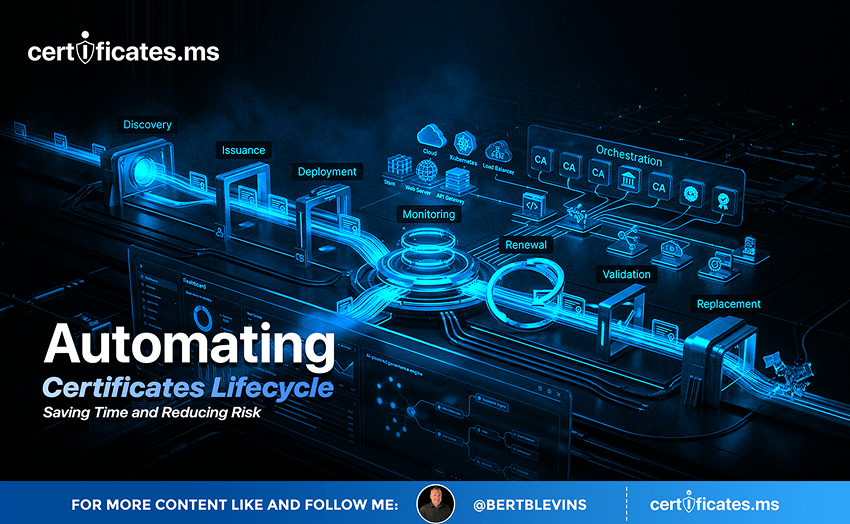
Every certificate conversation in 2026 eventually arrives at the same clock, and it is worth closing on it here. The CA/Browser Forum’s Ballot SC-081v3 is not a proposal under discussion; it is an approved, already-in-motion schedule. Maximum public TLS certificate lifetimes fall from 398 days to 200 days on March 15, 2026. They fall again to 100 days on March 15, 2027. By March 15, 2029, they drop to just 47 days, with domain validation itself needing to be re-proven roughly every 10 days.
Translate that into operational terms and the picture gets stark quickly. An organization currently renewing certificates a few times a year will be handling renewal events on the order of every couple of weeks by the end of this countdown, across every endpoint it operates. Manual tracking, calendar reminders, and a spreadsheet somebody checks once a month will not survive contact with that cadence. What has always been an occasional chore is becoming a continuous, automated operation, whether an organization plans for it or not.
Hardened router configurations still need certificates renewed under the shrinking public lifetime schedule below, and the automated renewal discussed throughout this series should be layered on top of, not instead of, the protocol and cipher hardening covered here, since a properly renewed certificate on a poorly hardened configuration still leaves meaningful attack surface exposed.
The 200-day, 100-day, and 47-day milestones are not distant hypotheticals; the first has already arrived. Organizations that build the automation loop now, generating keys, vaulting them securely, brokering issuance across Certificate Authorities through APIs, and rebinding certificates to live endpoints without manual intervention, will meet each deadline without disruption. Organizations that wait will be rebuilding their certificate operations under deadline pressure, with far less room for error and far less time to get it right. The countdown is the call to action. The only real decision left is whether to automate on your own schedule, or on the CA/Browser Forum’s.