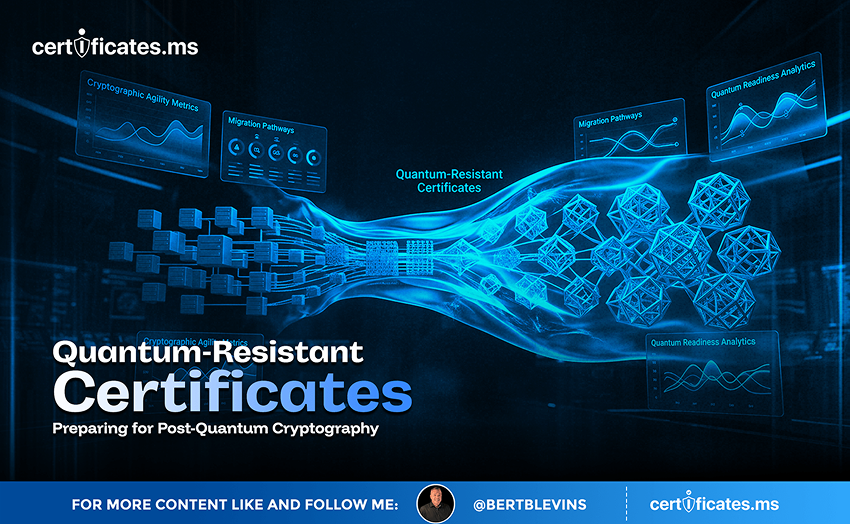
Quantum-Resistant Certificates: Preparing for Post-Quantum Cryptography
Quantum computing capable of breaking today’s public key cryptography does not exist yet, but the cryptographic standards designed to survive it already do, and the certificate ecosystem is beginning the long process of adopting them. This article covers what quantum-resistant certificates actually involve, where the industry genuinely stands today, and what organizations should realistically be doing to prepare.
Why This Threat Is Taken Seriously Despite No Working Machine Yet
Shor’s algorithm, a quantum algorithm published decades ago, would efficiently break both RSA and elliptic curve cryptography if run on a sufficiently powerful, error-corrected quantum computer, a capability that does not currently exist but that credible technical estimates suggest may become feasible within the working lifetime of systems being deployed today. The threat that matters most in the near term is harvest-now-decrypt-later: an adversary can record encrypted traffic today and simply wait, meaning data requiring long-term confidentiality is already exposed to a future decryption risk even though no quantum computer capable of that decryption exists at the moment the data was captured.
The New Standards Actually Available Today
NIST finalized its first set of post-quantum cryptographic standards in 2024, including a lattice-based signature scheme and a hash-based signature scheme, both designed specifically to resist quantum attacks using entirely different mathematical foundations than RSA or elliptic curve cryptography. These standards are not theoretical; they are published, implementable, and already supported in several major cryptographic libraries, marking the point where post-quantum readiness moved from academic research into practical, available tooling.
Why Certificates Themselves Are Migrating Slower Than Key Exchange
Post-quantum key exchange has already been widely deployed in hybrid form across major browsers and TLS libraries, protecting against harvest-now-decrypt-later for the data actually flowing over a connection. Certificate signatures, by contrast, are migrating more slowly, in part because a signature only needs to remain secure at the moment it is verified rather than indefinitely afterward, and in part because current post-quantum signature standards produce considerably larger signatures and public keys than RSA or ECDSA, creating real handshake size and performance costs that the industry is still working through rather than simply accepting as an unavoidable tradeoff.
What Practical Preparation Actually Looks Like Today
For most organizations, meaningful preparation right now does not mean rushing to issue post-quantum certificates for public web traffic, since no major browser root program currently accepts post-quantum signatures in standard certificate chains. It means building crypto-agility into infrastructure, ensuring systems can support new algorithms without a multi-year re-architecture when the time comes, inventorying where long-lived cryptographic commitments exist, such as code signing certificates or archival document signatures that must remain valid many years into the future, and tracking the genuinely fast-moving standards landscape so the organization is ready to act once major CAs and browsers actually begin accepting post-quantum certificate chains.
Where Post-Quantum Signatures Are Already Live
Some narrower, fully controlled environments have already deployed post-quantum signatures in production, particularly for authenticating connections between organizations that can coordinate the transition directly without needing broad public trust-store support, such as a content delivery network authenticating its own internal edge-to-origin connections. This gives the industry real production experience with these algorithms well ahead of the broader public web adopting them, and is worth watching as a leading indicator of how the wider transition will eventually unfold.
The Format Redesign Happening Alongside the Algorithm Change
Rather than simply substituting post-quantum signatures into the existing X.509 certificate format, major CAs and browser vendors are jointly developing new, more compact certificate structures specifically designed to carry post-quantum signatures without the dramatic size penalty a naive substitution would create. This means the eventual quantum-resistant certificate ecosystem may look structurally different from today’s certificates, not simply the same format with bigger numbers inside it, which is an important nuance for anyone assuming the transition will be a simple drop-in algorithm swap.
Quantum Readiness for AI-Driven Systems
Organizations building long-lived AI systems, particularly those signing models, training data provenance records, or audit trails that need to remain verifiable for many years, should treat those specific artifacts with the same urgency as any other long-lived signature category, since an AI model’s cryptographic provenance signed today may need to remain trustworthy well into the era when quantum computers capable of breaking today’s signatures could plausibly exist. Routine TLS certificates protecting everyday AI API traffic, by contrast, fall under the same lower-urgency category as any other short-lived server certificate.
The Countdown Is Already Running: 200 Days, 100 Days, 47 Days
Every certificate conversation in 2026 eventually arrives at the same clock, and it is worth closing on it here. The CA/Browser Forum’s Ballot SC-081v3 is not a proposal under discussion; it is an approved, already-in-motion schedule. Maximum public TLS certificate lifetimes fall from 398 days to 200 days on March 15, 2026. They fall again to 100 days on March 15, 2027. By March 15, 2029, they drop to just 47 days, with domain validation itself needing to be re-proven roughly every 10 days.
Translate that into operational terms and the picture gets stark quickly. An organization currently renewing certificates a few times a year will be handling renewal events on the order of every couple of weeks by the end of this countdown, across every endpoint it operates. Manual tracking, calendar reminders, and a spreadsheet somebody checks once a month will not survive contact with that cadence. What has always been an occasional chore is becoming a continuous, automated operation, whether an organization plans for it or not.
The shrinking certificate lifetime schedule below is, in a sense, quietly quantum-relevant on its own: certificates that already expire within 47 days carry a correspondingly small window during which any future quantum-capable attacker would even have a valid signature worth targeting, reinforcing why full automation matters regardless of where the post-quantum transition itself currently stands.
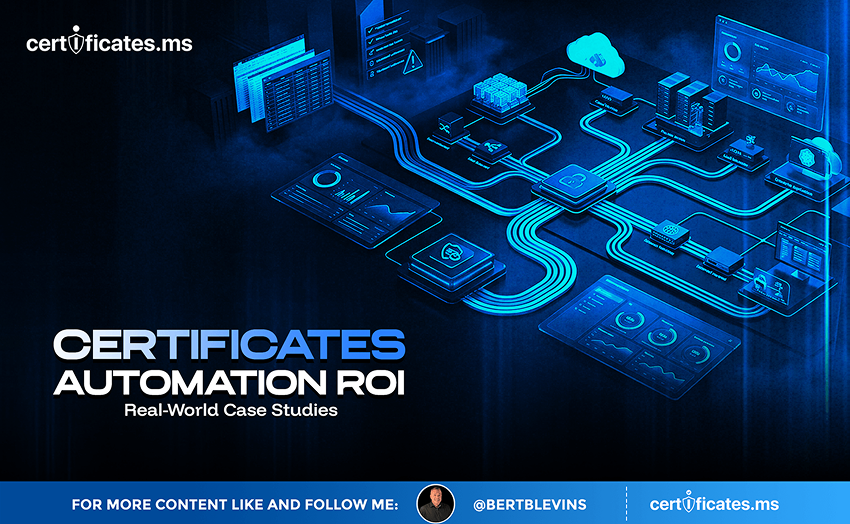
The 200-day, 100-day, and 47-day milestones are not distant hypotheticals; the first has already arrived. Organizations that build the automation loop now, generating keys, vaulting them securely, brokering issuance across Certificate Authorities through APIs, and rebinding certificates to live endpoints without manual intervention, will meet each deadline without disruption. Organizations that wait will be rebuilding their certificate operations under deadline pressure, with far less room for error and far less time to get it right. The countdown is the call to action. The only real decision left is whether to automate on your own schedule, or on the CA/Browser Forum’s.