Revocation Checking in Browsers and Applications

Revocation exists to invalidate a certificate before its natural expiration, but a revocation mechanism only matters if clients actually check it. This article looks specifically at how browsers and applications handle revocation checking in practice, where the theory of CRLs and OCSP, covered in depth elsewhere in this series, meets the messier reality of what actually happens during a real connection.

Short-Lived Certificates: The Future of Certificate Security

Every certificate conversation happening across the industry right now eventually points at the same underlying trend: certificates are getting shorter-lived, on purpose, as a deliberate security strategy rather than a bureaucratic inconvenience. This article makes the case directly for why short-lived certificates represent a genuine security improvement, not merely a compliance burden to be tolerated.

Certificate Lifecycle Management (CLM) Tools Comparison

Once an organization\’s certificate estate outgrows scripts and spreadsheets, a dedicated Certificate Lifecycle Management platform becomes less of a luxury and more of an operational necessity. The market for these platforms has grown considerably, and the options span open-source tooling, cloud-native services, and full enterprise platforms. This article compares the major categories to help frame the decision, without prescribing one specific vendor as universally correct.

The Economics of Certificate Management: ROI Calculations

Justifying an investment in certificate automation or a dedicated CLM platform often requires putting a genuine number behind the decision, not just an appeal to best practice. This article walks through how to actually calculate the return on investment for certificate management improvements, building on the cost breakdown covered earlier in this series.

Training Your Team: Certificate 101 for IT Professionals

Technical teams often absorb certificate knowledge haphazardly, picking up fragments during incidents, half-explained by whoever happened to fix the last outage. That approach leaves gaps that surface at the worst possible moment. This article lays out a practical framework for actually training an IT team on certificates properly, rather than leaving it to accumulate informally.

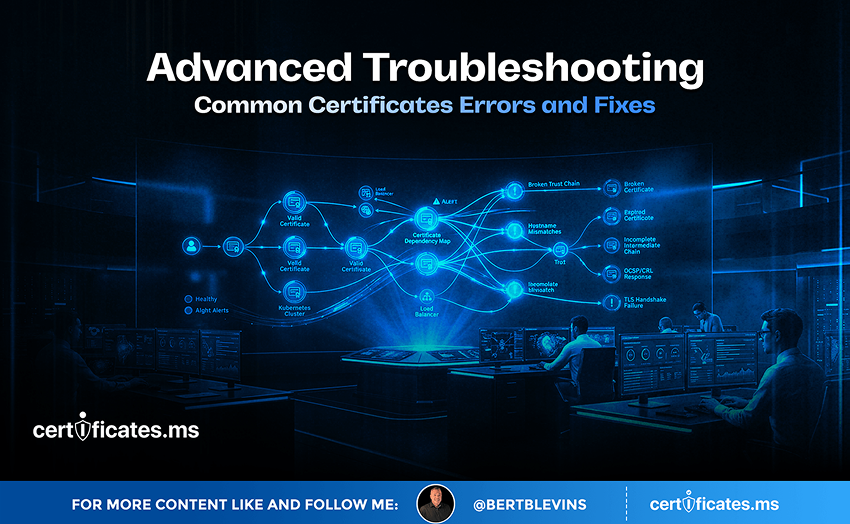
Advanced Troubleshooting: Common Certificate Errors and Fixes

Certificate errors have a reputation for being cryptic, throwing up messages like unable to verify the first certificate or certificate name mismatch that tell an administrator something is wrong without explaining exactly what. This article works through the most common certificate errors encountered in real production environments, what actually causes each one, and how to fix it efficiently rather than through trial and error.

Migrating from Legacy PKI to Modern Certificate Management

Plenty of organizations are running PKI infrastructure that was designed and deployed a decade or more ago, back when certificates lasted years, renewal happened manually a few times annually, and nobody had heard of an AI agent needing its own certificate. Migrating that legacy PKI to a modern, automation-first model is a substantial project, but it is also an increasingly unavoidable one. This article covers how to approach that migration without breaking everything currently depending on the old system.

Quantum-Resistant Certificates: Preparing for Post-Quantum Cryptography

Quantum computing capable of breaking today\’s public key cryptography does not exist yet, but the cryptographic standards designed to survive it already do, and the certificate ecosystem is beginning the long process of adopting them. This article covers what quantum-resistant certificates actually involve, where the industry genuinely stands today, and what organizations should realistically be doing to prepare

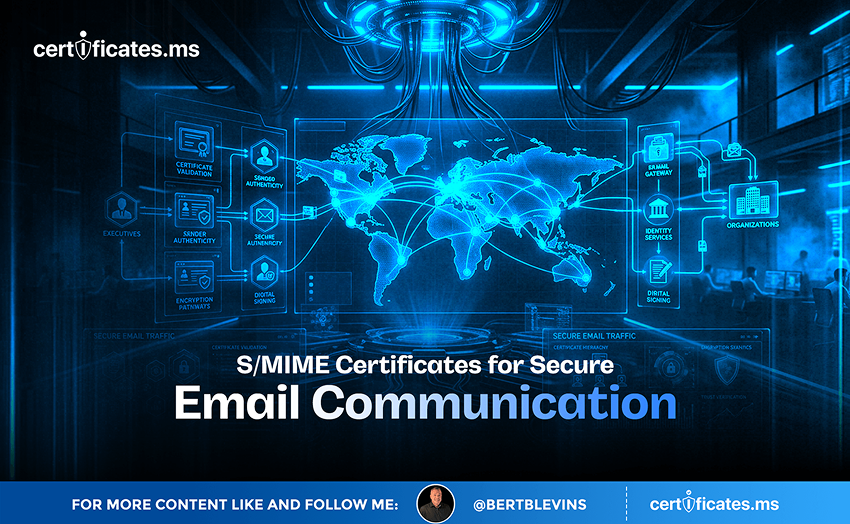
S/MIME Certificates for Secure Email Communication

Email remains one of the least inherently secure communication channels most organizations still depend on daily, transmitted in plain text by default and trivially easy to spoof without additional protection. S/MIME certificates address both of those problems directly, providing genuine encryption and verifiable sender authentication for email. This article covers how S/MIME actually works and where it fits into a modern security strategy.

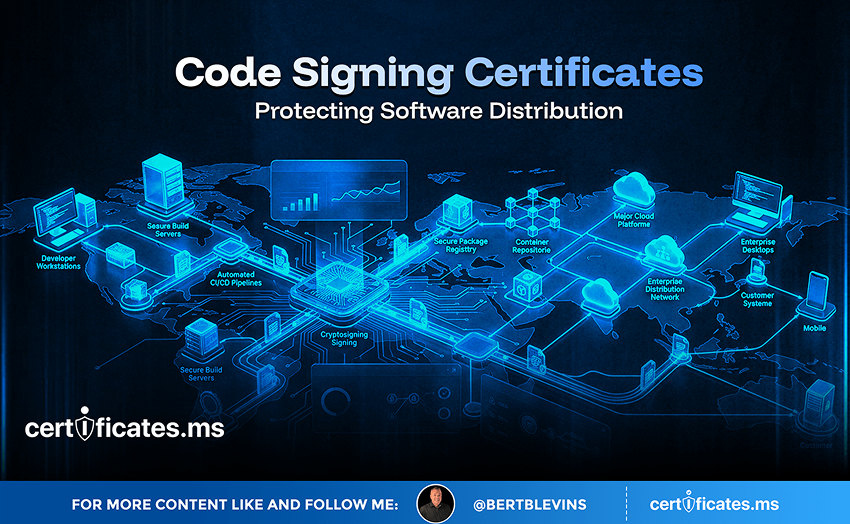
Code Signing Certificates: Protecting Software Distribution

Every time an operating system displays a warning about an unrecognized publisher, or silently allows an application to install without any friction at all, a code signing certificate is somewhere behind that decision. This article covers how code signing actually works, why it matters more than ever given the current software supply chain threat landscape, and what organizations distributing software need to get right.

Mobile Device Certificates: MDM and BYOD Integration

Mobile devices, whether company-owned or personally owned under a bring-your-own-device policy, need the same strong authentication as any other endpoint touching corporate resources, but they present distinct deployment challenges that desktop and server certificate management does not fully anticipate. This article covers how certificate deployment works across mobile device management platforms and the specific considerations BYOD environments introduce.

VPN Certificate Authentication: Stronger Than Pre-Shared Keys

Pre-shared keys remain a common way to authenticate VPN connections, largely because they are simple to configure and understand. They are also a genuinely weaker security model than certificate-based authentication, and understanding exactly why is worth walking through directly. This article compares the two approaches and makes the practical case for moving VPN authentication toward certificates.

Zero Trust Architecture and Certificate-Based Access

Zero trust has become one of the most widely referenced concepts in enterprise security, and also one of the most loosely defined in casual conversation. Stripped of marketing language, zero trust rests on a fairly simple principle: never trust a connection by default, verify it explicitly every time, regardless of whether it originates inside or outside the traditional network perimeter. Certificates are one of the most concrete, practical tools for making that principle actually enforceable rather than aspirational. This article covers exactly how the two fit together.

Certificate Automation with Terraform and Ansible

Infrastructure-as-code tools have become the default way most organizations provision and manage servers, networks, and cloud resources, and certificate management fits naturally into that same model. Terraform and Ansible, two of the most widely used tools in this space, each offer distinct but complementary approaches to automating certificate issuance and deployment. This article covers how to use both effectively.

PowerShell Scripts for Bulk Certificate Operations

Windows-centric environments often accumulate certificates across dozens or hundreds of servers, and reaching into each machine\’s certificate store individually to check, renew, or clean up certificates does not scale past a handful of systems. PowerShell offers a genuinely powerful toolkit for handling these operations in bulk, and this article covers the practical patterns for using it effectively.