Cost-Benefit Analysis: In-House CA vs Managed PKI Services

Deciding whether to build and run a private CA internally or adopt a managed PKI service is one of the more consequential infrastructure decisions a growing organization will make, and it deserves a genuine cost-benefit comparison rather than a default assumption in either direction. This article walks through that comparison directly.

Scripting Certificate Requests with REST APIs

Beneath every ACME client, CLM platform, and CI/CD certificate integration discussed throughout this series sits the same fundamental building block: a REST API call requesting a certificate. Understanding how to script these requests directly gives developers and administrators a level of flexibility that pre-built tools sometimes cannot match. This article covers the practical patterns for scripting certificate requests against REST-based CA and CLM APIs.

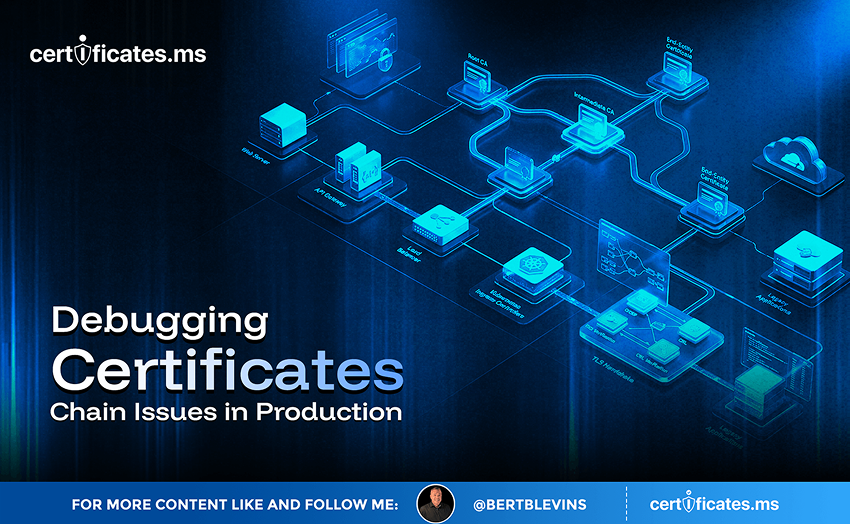
Debugging Certificate Chain Issues in Production

Chain of trust concepts, covered earlier in this series, are straightforward to explain in the abstract, but diagnosing a real chain-related failure in a live production environment, often under real time pressure with customers actively affected, requires a systematic approach rather than guesswork. This article walks through exactly how to debug certificate chain issues methodically when they surface in production.

Certificates for Kubernetes and Container Environments

Kubernetes has become the dominant orchestration platform for containerized applications, and its dynamic, ephemeral nature makes certificate management inside a Kubernetes cluster meaningfully different from managing certificates on traditional, longer-lived servers. This article covers the specific tools and patterns that have emerged for handling certificates well within Kubernetes and broader container environments.

Edge Computing Security: Certificates for Distributed Devices

Edge computing pushes processing power out of centralized data centers and toward the physical locations where data is actually generated, factories, retail stores, vehicles, remote infrastructure sites, creating a fundamentally more distributed security challenge than a traditional centralized architecture presents. Certificates remain the core identity and encryption mechanism at the edge, but the distributed, often physically exposed nature of edge deployments introduces considerations distinct from both traditional data center and pure IoT device scenarios. This article covers what edge computing demands from a certificate strategy specifically.

Smart Card and FIDO2 Integration with Certificates

Smart cards and FIDO2 security keys represent two generations of hardware-backed authentication, both built around the same core idea of keeping a private key physically isolated from the device attempting to authenticate. Understanding how each integrates with certificate-based authentication, and where they overlap and diverge, matters for any organization designing strong, phishing-resistant authentication. This article covers both technologies and how they fit alongside the certificate concepts covered throughout this series.

Revoking Compromised Certificates: Incident Response Playbook

Knowing conceptually when and why to revoke a certificate, covered earlier in this series, is different from actually executing that revocation correctly and quickly during a genuine, active incident, under time pressure, with real stakes attached to getting it right the first time. This article lays out a practical incident response playbook specifically for compromised certificate scenarios.

Measuring Certificate Management Maturity in Your Organization

Most organizations have an intuitive sense of whether their certificate management is in good shape or barely holding together, but intuition is a poor basis for prioritizing investment or demonstrating progress to leadership. This article offers a structured way to actually measure certificate management maturity, giving organizations a concrete way to assess where they stand and what improvement would actually look like.

Future-Proofing Your PKI Strategy for 2030

Several distinct forces are converging on the certificate ecosystem at once: shrinking public lifetime schedules, a rapidly growing population of machine and AI identities, and the early stages of a genuine post-quantum cryptography transition. Building a PKI strategy that holds up through the end of this decade requires accounting for all three simultaneously rather than treating them as separate, isolated projects. This article pulls the threads discussed throughout this series together into a single forward-looking strategy view.

Certificate Automation ROI: Real-World Case Studies

The economics and ROI calculation frameworks discussed earlier in this series become considerably more persuasive when grounded in realistic, composite scenarios showing how the numbers actually play out in practice. This article walks through several illustrative case study scenarios, drawn from patterns commonly reported across the industry, showing what certificate automation investment actually delivers in concrete terms.

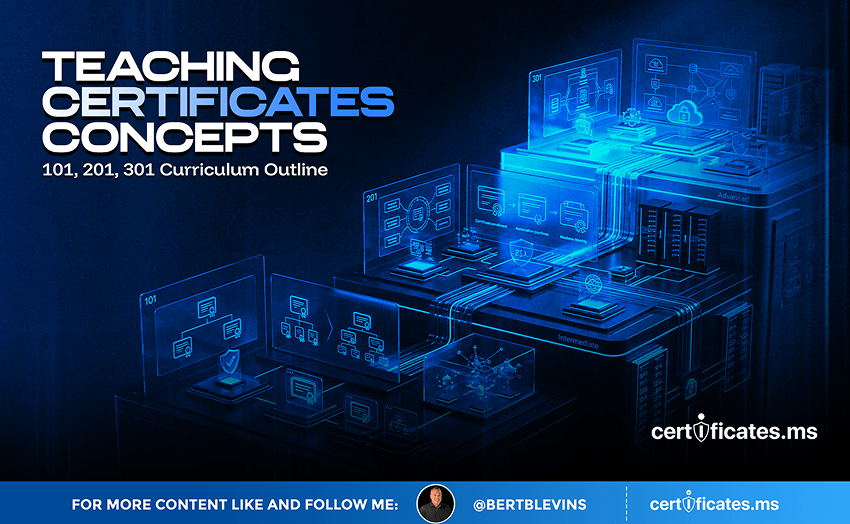
Teaching Certificate Concepts: 101, 201, 301 Curriculum Outline

This series has, across its full run, effectively built out a complete certificate education curriculum organized around exactly this progression: foundational concepts, intermediate operational depth, and advanced architectural mastery. This article pulls that structure together explicitly, giving trainers and team leads a concrete outline for teaching certificate concepts in a properly sequenced way, referencing where each topic is covered in more depth elsewhere in this series.

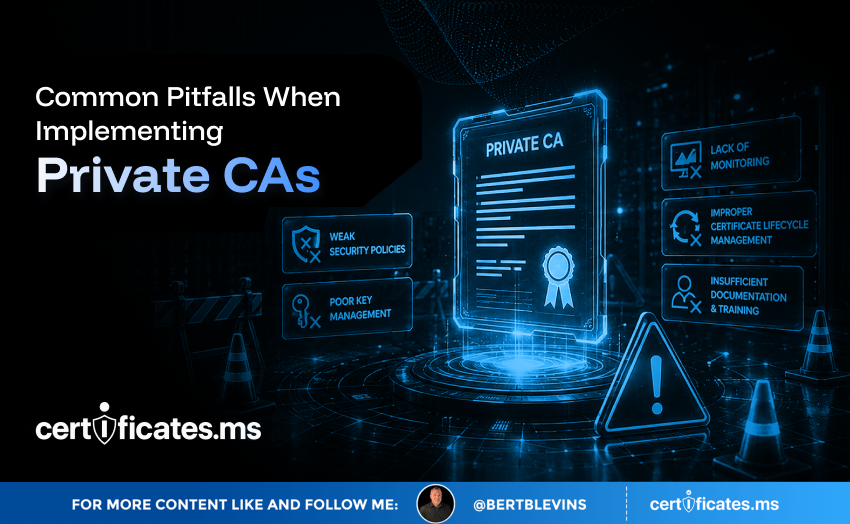
Common Pitfalls When Implementing Private CAs

Standing up a private Certificate Authority is a well-documented process, discussed throughout this series, but the gap between a technically functioning private CA and a genuinely well-run one is where most organizations actually struggle. This article covers the specific pitfalls that recur most often during private CA implementation, drawn from patterns discussed across this series\’ coverage of internal PKI.

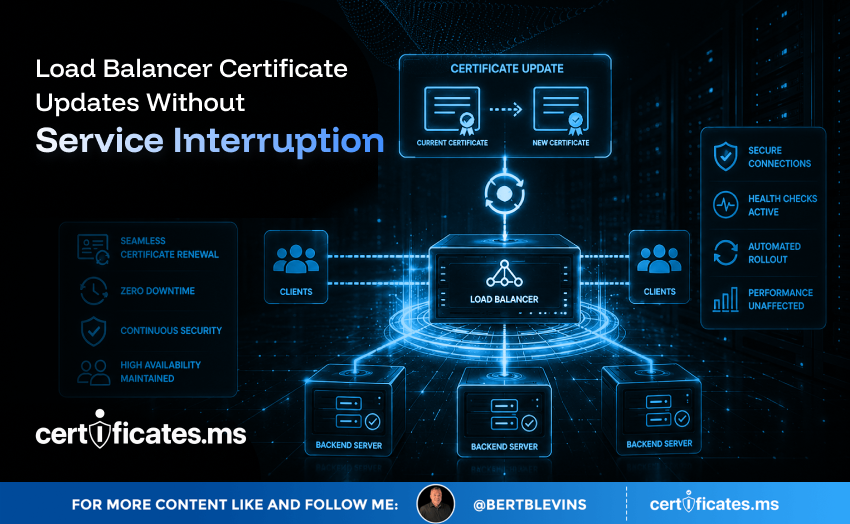
Load Balancer Certificate Updates Without Service Interruption

Several earlier articles in this series covered load balancer certificate best practices for specific platforms, HAProxy, NGINX, F5 BIG-IP. This article steps back to focus specifically on the general mechanics of updating a certificate on any load balancer without dropping a single active connection, a discipline that applies across virtually every load balancing technology regardless of vendor.

Public-Facing Router Certificate Hardening Techniques

Having a properly issued, correctly chained certificate on a public-facing router, covered in the general best practices article earlier in this series, is the starting point, not the finish line. Hardening goes further, actively reducing the attack surface around that certificate and the TLS configuration surrounding it. This article focuses specifically on hardening techniques that go beyond basic certificate hygiene.

Programming Secure Channels: TLS Handshake Deep Dive

Earlier articles in this series referenced the TLS handshake at a conceptual level, certificate validation, chain building, key negotiation, but understanding it at the protocol message level gives developers genuinely useful troubleshooting and design intuition. This article walks through the TLS 1.3 handshake specifically, message by message, and what a developer working directly with TLS libraries needs to understand about each step.