Monitoring Certificate Expirations: Tools and Dashboards

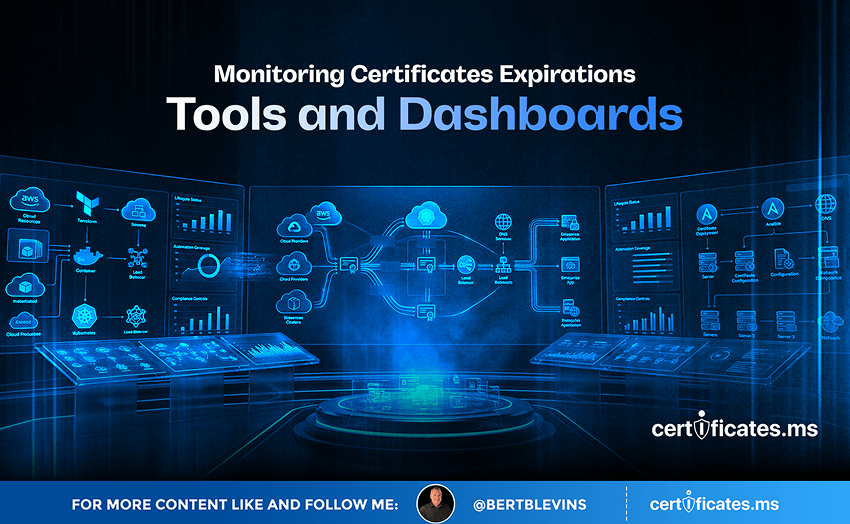
Every certificate outage discussed elsewhere in this series shares a common root cause: nobody was watching the expiration date closely enough, or the person watching had no reliable way to see the full picture across the entire environment. Monitoring is the unglamorous discipline that closes that gap, and this article covers the tools and dashboard approaches that actually make certificate monitoring effective rather than a box-checking exercise.

The Human Cost of Manual Certificate Management

Certificate management discussions tend to focus on dollars and downtime, and both matter considerably, but there is a quieter cost that rarely makes it into a budget spreadsheet: the toll manual, reactive certificate management takes on the actual people responsible for it. This article looks at that human dimension directly, and why it is a legitimate part of the case for automation, not just a soft, secondary consideration.

Budgeting for PKI Infrastructure in 2026 and Beyond

PKI budgeting has historically been an afterthought for many organizations, a small annual line item for certificate purchases with little further consideration. That approach is no longer viable given how quickly the underlying requirements are shifting. This article covers what a realistic PKI budget should actually include heading into 2026 and the years immediately following, when renewal frequency and machine identity volume are both climbing sharply.

Certificate Misconfiguration Disasters: Lessons Learned

The certificate world\’s cautionary tales tend to follow recognizable patterns, and studying them is often more instructive than any amount of abstract best-practice guidance. This article walks through the categories of certificate misconfiguration that have caused genuine, well-documented incidents across the industry, and the specific lessons each one teaches.

Best Practices for Storing Private Keys Securely

Every guarantee a certificate provides ultimately rests on one assumption: that the private key behind it has genuinely stayed private. Get key storage wrong and every other precaution around certificate management, validation levels, chain configuration, monitoring, becomes irrelevant, since a stolen key lets an attacker bypass all of it. This article covers the practical hierarchy of private key storage options and how to choose appropriately.

HSMs and Hardware Security Modules for Certificate Protection

Hardware security modules occupy a distinct tier in the private key protection hierarchy discussed elsewhere in this series, offering a level of assurance software-based storage simply cannot match for an organization\’s most sensitive keys. This article looks specifically at what HSMs are, how they work, and where the investment genuinely pays off.

Comparing Public CAs: DigiCert, Sectigo, GlobalSign, and More

Choosing among public Certificate Authorities involves more than comparing sticker prices, since each major CA differentiates itself through validation options, automation support, support quality, and specific enterprise features. This article compares several of the major players in the space to help frame that decision, without treating any single vendor as universally the right answer.

Internal vs External Certificates: Strategy Guide

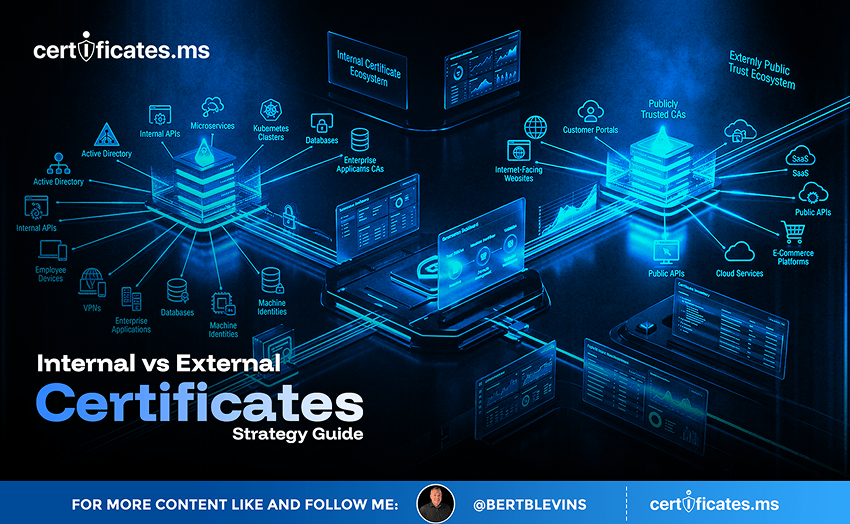
One of the most consequential early decisions in any certificate strategy is a deceptively simple one: which certificates should come from a public CA, and which should come from an internal private CA instead. Getting this wrong in either direction creates real problems, unnecessary cost and complexity on one side, or unnecessary risk and compatibility headaches on the other. This article lays out a practical framework for making that call correctly and consistently.

Certificate Revocation in Cloud Environments (AWS, Azure, GCP)

Revocation, covered conceptually elsewhere in this series, takes on distinct practical characteristics inside each major cloud provider\’s ecosystem, since AWS, Azure, and Google Cloud each handle certificate issuance and revocation through their own managed services with their own specific mechanics and limitations. This article covers what revocation actually looks like across these three platforms.

IoT Certificate Rotation Strategies Without Downtime

Rotating a certificate on a server sitting in a data center is one thing; rotating a certificate on a device deployed in a customer\’s home, a remote industrial site, or embedded inside a piece of equipment that cannot simply be taken offline is an entirely different operational challenge. This article focuses specifically on rotating IoT device certificates without disrupting the device\’s ongoing operation, building on the broader IoT certificate management concepts covered earlier in this series.

Machine Identity Management: Beyond Human Users

Identity and access management has spent decades built almost entirely around human users: employees, customers, administrators, each with a username, a password, and increasingly a second factor. That model is now covering a shrinking share of the identities any organization actually needs to manage. This article steps back to look at machine identity management as its own discipline, distinct from traditional IAM, and why it deserves dedicated strategy rather than being treated as a smaller offshoot of human identity management.

Using Certificates for API Authentication and Authorization

API keys and bearer tokens dominate most API authentication conversations, largely because they are simple to implement. Certificates offer a genuinely stronger alternative for a meaningful subset of API use cases, particularly where the stakes are high enough to justify the additional setup effort. This article covers how certificate-based API authentication actually works and where it earns its added complexity.

Mutual TLS (mTLS): Implementing Two-Way Certificate Auth

Mutual TLS has been referenced throughout this series as the mechanism underlying client certificate authentication, machine identity verification, and zero trust enforcement, but it deserves its own dedicated, practical treatment. This article walks through what mTLS actually involves at the implementation level and the considerations that separate a working mTLS deployment from a merely theoretical one.

Certificate 301: Designing Resilient PKI Architectures

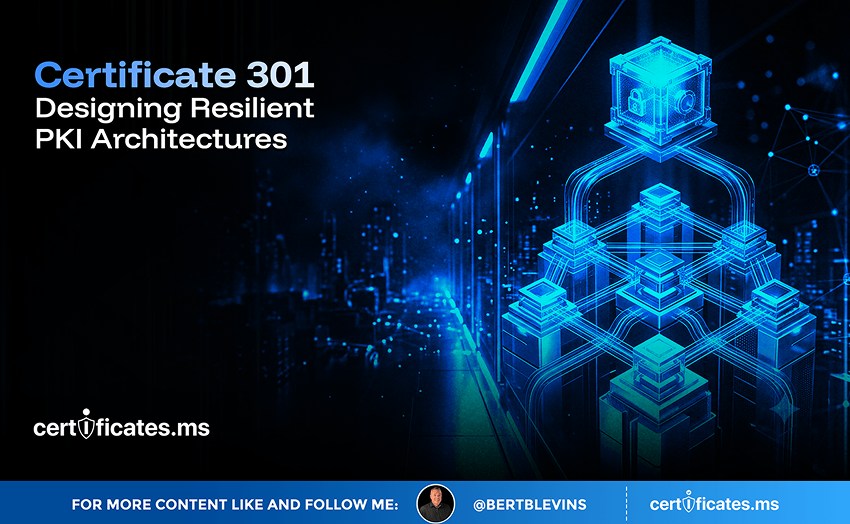
A PKI can be architecturally sophisticated, well-governed, and fully automated, and still fail catastrophically the moment a single issuing CA goes down or a data center becomes unreachable. Resilience is a distinct design concern from the structural and automation topics covered elsewhere in this series, focused specifically on what happens when something in the PKI itself breaks. This article covers how to design a PKI that survives failure rather than merely functioning correctly when everything is working.

The Role of Certificates in Compliance (HIPAA, PCI-DSS, GDPR)

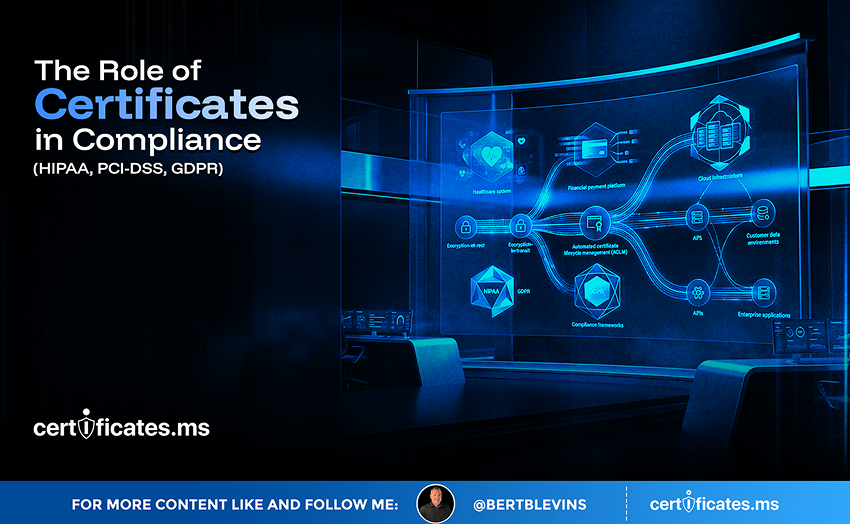
Certificates rarely get mentioned by name in the headline requirements of major regulatory frameworks, but they are quietly load-bearing infrastructure underneath a significant share of what these frameworks actually require in practice. This article covers how certificates support compliance obligations under HIPAA, PCI-DSS, and GDPR specifically, and what auditors under each framework tend to actually scrutinize.